
.svg)
AI succeeds - layoffs
AI fails - layoffs
AI not even used - believe it or not, layoffs
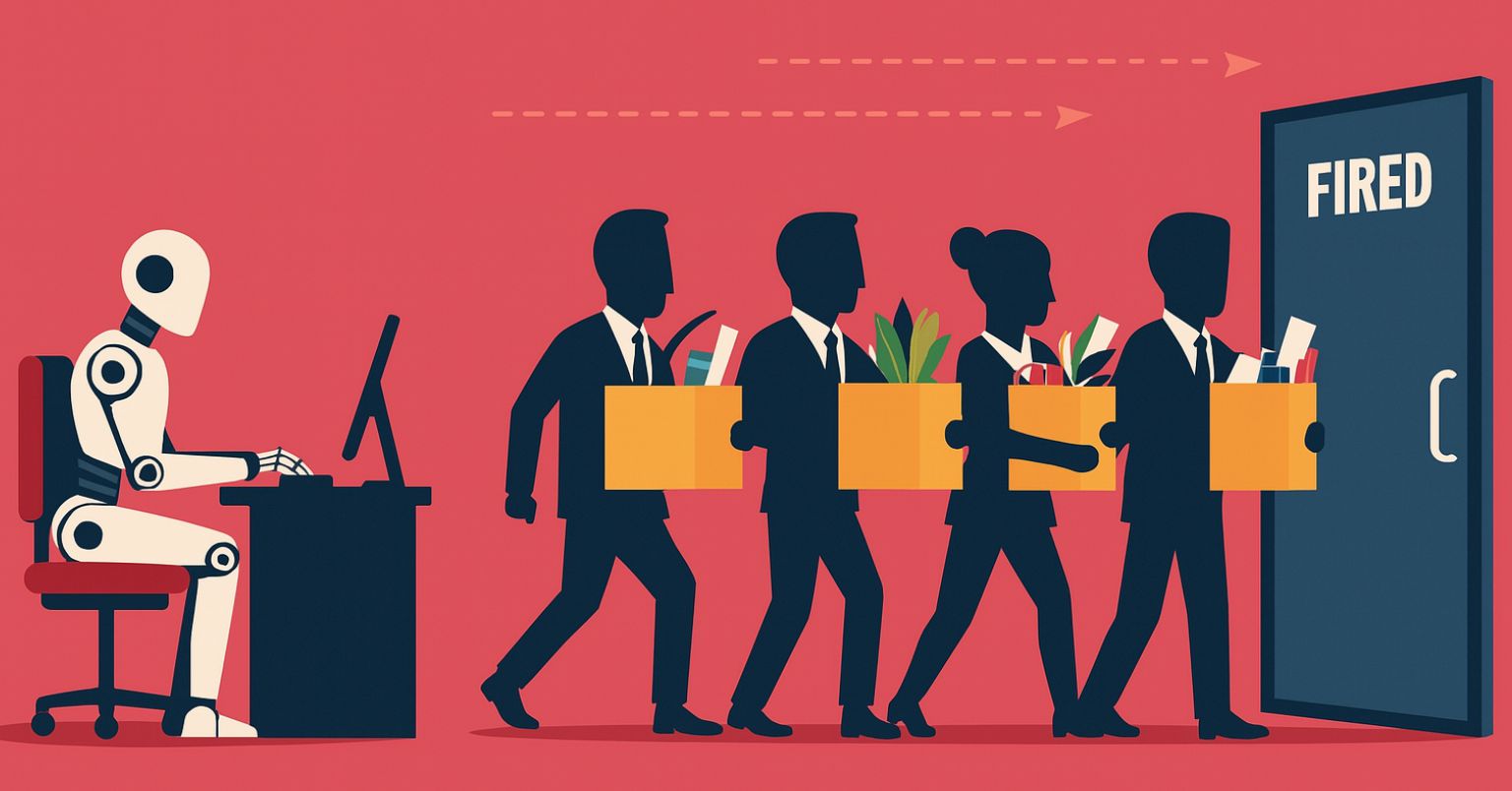
Over the last few years, layoffs attributed to AI have been scattering the headlines. The most recent being Block laying off 4000 (40%) and Atlassian 1600 (10%) staff. I have heard arguments from multiple angles regarding the role of AI in layoffs. Certainly, the angle the AI companies are taking is complete replacement of human employees with AI employees. However, the only perspective I've seen that has data behind it is: "AI has had no measurable macro impact on the economy, layoffs are in response to uncertainty and lack of growth." A strong datapoint that supports this conclusion is that the companies that are making these sweeping layoffs are doing so in response to results, and not in a proactive AI strategy while on an upward trajectory. If a company has truly figured out AI job replacement, then we will see them forging ahead in share price; current day, I believe any company experiencing meaningful growth will still increase headcount.
Most recently, Goldman Sachs’s chief economist, Jan Hatzius, said AI contributed “basically zero” to US economic growth last year, in part because much of the investment has been channelled into imported hardware rather than domestic output.
What we are seeing at Traffyk is that a lot of thought is required to identify how AI can increase productivity and capability within an organisation. Unfortunately, it’s not as simple as giving everyone Claude. At the micro-scale, a team’s/business unit’s workflow needs to be assessed, this process alone will uncover inefficiencies: duplicated effort, redundant work, and manual repetitive tasks. In these settings, the principal role of AI is to slot into these workflows to allow for reallocation of human resource.
A good example of this is in software development. AI is now exceptionally strong at coding. However, we’re still not seeing AI coders replacing human coders. This is because coding is only one duty within the coder’s remit, and it is not the bottleneck. The real constraint is judgement: deciding what should be built, understanding trade-offs, anticipating failure modes, and knowing when a plausible-looking output is in fact the wrong one.
This is best summarised through the statement: While I would be reluctant to hire a software engineer who did not use AI, I would still hire a software engineer if I had the budget.
Andrew Ng makes excellent points on this topic. He suggests that technologies which unlock human creativity have historically created more work than they destroy. The World Economic Forum’s latest Future of Jobs report is consistent with that broader view, projecting 170 million new roles and 92 million displaced by 2030, for a net gain of 78 million.For now, AI is doing less to eliminate labour, rather, than to reveal where firms have been poorly organised, and to reward those that can combine automation with human judgement.