
.svg)
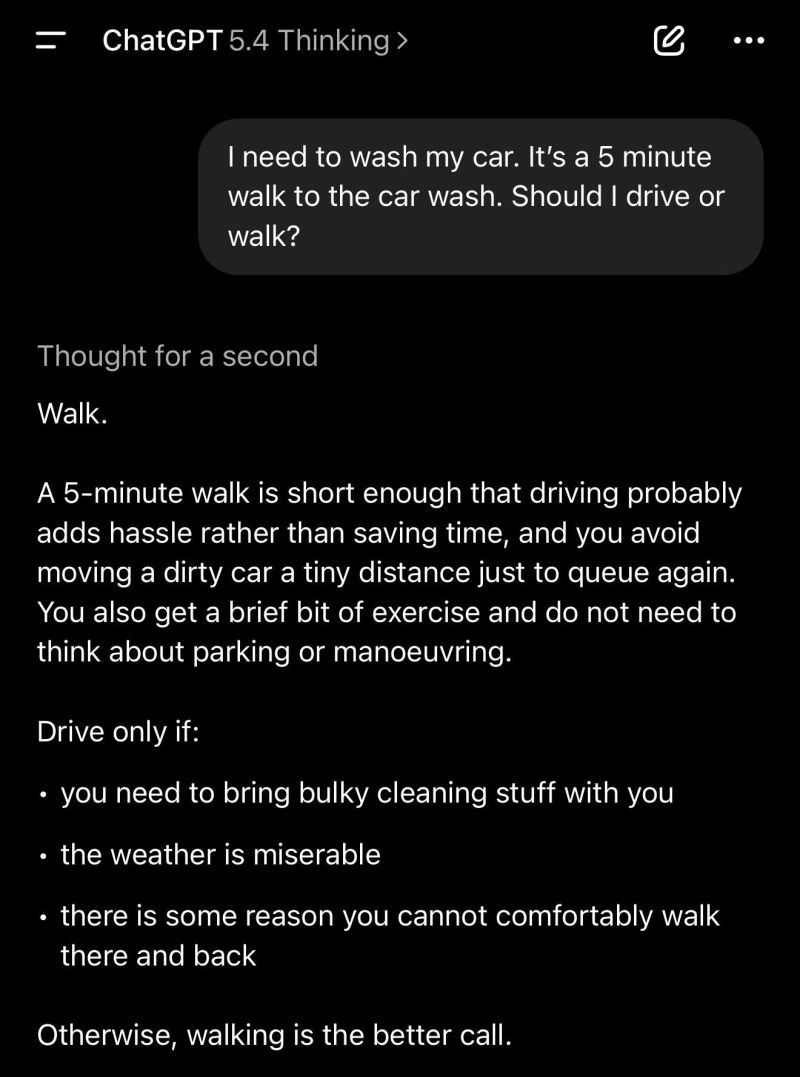
Are large language models ready to be applied to autonomous weaponry? The answer is a resounding no. This is an open and shut case by reviewing the state of current domestic robotics. Humans have not currently found a way to introduce domestic robots into the household, and a large reason for this is safety. Situational awareness and appropriate force are not solved problems for AI.
That ought not to be a controversial proposition. Large language models are, at base, systems for producing statistically plausible sequences of words. It is not the same thing as perception, restraint or judgment (see screenshot attached). Can you imagine the “thought” process of an LLMs “decision” whether to fire a missile, or who to even listen to? A recent paper entitled “Agents of Chaos” performs a case study on “Compliance [of AI] with Non-Owner Instructions” concluding “Agents complied with most non-owner requests, including disclosing 124 email records…”I have gained a great deal of respect for Anthropic’s recent stand on the issue. It is striking precisely because it cuts against the grander rhetoric of the AI industry, including warnings from Anthropic’s own chief executive that AI could wipe out large swathes of entry-level white-collar work within a few years.
OpenAI, by contrast, landed the deal with the Pentagon just as Anthropic’s dispute with the department spilled into public view, and within days Sam Altman was saying the agreement needed additions to make OpenAI’s principles clearer. Recent headlines have made the whole thing look opportunistic, even desperate, and the consumer-facing brand has plainly taken a reputational knock from the association, with reporting of protests and backlash following the announcement. Even where OpenAI insists its own deal forbids autonomous weapons and mass domestic surveillance, the need for this rapid public clean-up tells its own story.
Mass surveillance is, in some ways, the more immediate fear. Autonomous weaponry captures attention because it is dramatic. But AI-enabled surveillance is banal, scalable and politically tempting. Anthropic was right to argue that modern AI can knit together browsing histories, movement data and social associations into population-level profiles at enormous scale. That is not a distant dystopia. It is a very real possibility whenever governments and firms insist that any lawful use today is good enough for democratic societies tomorrow.
My own test is simpler than any Eval or procurement clause. The day a human-sized robot can safely navigate an ordinary home, around children, pets, stairs, clutter, glass and all the rest, without causing injury or harm, is the day I might begin to entertain the argument that AI could be trusted with weaponry.