
.svg)
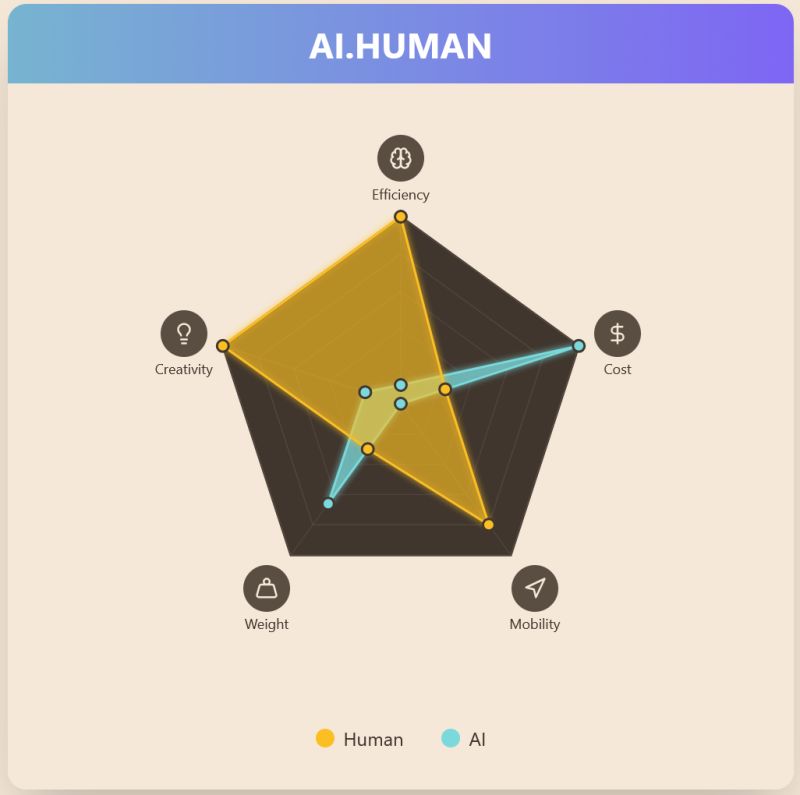
The human brain’s bandwidth is 20 Peta FLoating point OPerations per Second (PFLOPS). Where FLOPS are the equivalent of neural signals that we can compare to computer operations (estimated by George Hotz).
The latest NVIDIA GPUs (B200s) are capable of approx. 1 PFLOP (for a good level of precision). Therefore, you’ll need about 20 GPUs to match a human’s speed of thought. The best AI models require approx. 20 B200 GPUs to serve ONE customer. The cheapest B200 I could find online was $132k AUD.
For the best silicon-based lifeform to interact with one human we need $2.64M AUD in silicon hardware.
Now let’s compare power:
The average human burns energy at a rate of 100 W20xB200s = 20,000 W.
Not even close.
AI’s massive reliance on energy and infrastructure, and the fact they are immobile makes them incredibly vulnerable. If humanity wanted to, they could stop a grey swan event with relative ease.
A more likely scenario is the weaponisation of AI with human support. This is the real threat, and I believe it is already happening. This week, the first global AI cyber-attack was confirmed. Chinese state operatives were found to be using Anthropic’s Claude. Further, recent analysis revealed that 30% of all content posted on /r/conservative were from two (likely Russian deployed AI) accounts. What is the solution? Investment into cybersecurity and ironically, go outside and interact with real humans.